Deaf or Hard-of-Hearing
Florida Definition
A student who is deaf or hard-of-hearing has a hearing loss aided or unaided, that impacts the processing of linguistic information and which adversely affects performance in the educational environment. The degree of loss may range from mild to profound.
General Overview
It is useful to know that sound is measured by its loudness or intensity (measured in decibels, dB) and its frequency or pitch (measured in hertz, Hz). Hearing loss can occur in either or both areas, and may exist in only one ear or in both ears.Hearing losses are defined in terms of (1) the degree of loss, (2) the age at which the loss occurs, and (3) the type of loss. The terms that are used with hearing loss are deafness and hard-of-hearing. Deafness is a hearing loss that is severe enough that the child cannot process linguistic information through hearing, even when using amplification or hearing aids, and adversely affects the child’s educational performance. Hard-of-hearing is defined as a loss in hearing, permanent or fluctuating that adversely affects a child’s educational performance and Central Auditory Processing Disorders.There are four categories of hearing losses: conductive losses, sensorineural losses, mixed losses, and central auditory processing losses. The first three types of hearing losses are considered to be due to problems with auditory acuity, or the ability to take in sounds and for the brain to process sounds successfully. The fourth type of hearing loss is an auditory processing difficulty, meaning the individual can “hear” the sounds, but has problems understanding them.
- Conductive hearing loss. Conductive hearing losses are caused by diseases or obstruction in the outer or middle ear (the conduction pathway for sound to reach the inner ear). Conductive hearing losses usually affect all frequencies of hearing evenly and do not result in severe losses. A person with a conductive hearing loss is able to use a hearing aid or can be helped medically orsurgically.
- Sensorineural hearing loss. Sensorineural hearing losses result from damage to the delicate sensory hair cells of the inner ear, or cochlea, or the nerves that supply it. These hearing losses can range from mild to profound. They often affect the person’s ability to hear certain frequencies more than others. Thus, even with amplification to increase the sound level, a person withsensorineural hearing loss may perceive distorted sounds, sometimes making the successful use of a hearing aidimpossible.
- Mixed hearing loss. A mixed hearing loss refers to a combination of conductive and sensorineural loss and means that a problem occurs in both the outer or middle and the innerear.
- Central auditory processing hearing loss. A central auditory processing hearing loss results from damage or impairment to the nerves or nuclei of the central nervous system, that occurs either in the pathways to the brain or in the brain itself.
Common Causes
- Congenital. For deafness or hearing loss to be considered congenital, the deafness or hearing loss must be present at birth. Causes include: a family history of hearing loss or deafness; infections during pregnancy (such as rubella); complications during pregnancy (such as the Rh factor, maternal diabetes, or toxicity). A child’s hearing loss or deafness may also be a characteristic of another disability such as Down syndrome, Usher syndrome, Treacher Collins syndrome, and Alport syndrome.
- Acquired. Deafness or hearing loss that occurs after birth is considered acquired and is a result of environment effects such as illness or injury. The most common acquired hearing loss is exposure to noise. Other causes include: ear infections (known as otitis media); head trauma; build up of fluid behind the eardrum; childhood diseases (such as mumps, measles, or chicken pox).
Diagnostic Indicators
- The Centers for Disease Control and Prevention (the CDC) recommends that every newborn be screened for hearing loss as early as possible, usually before they leave the hospital.
- An audiological evaluation that documents a permanent or fluctuating hearing threshold level that interferes with progress in and one of the following areas: developmental skills or academic performance, social-emotional development, or linguistic and communicative skills.
State of Florida Eligibility Requirements
Eligibility requirements for special education services for students who are deaf or hard-of-hearing can be found on the FLDOE website at
http://www.fldoe.org/academics/exceptional-student-edu/ese-eligibility/deaf-or-hard-of-hearing-dhh.stml.
Characteristics
 Primary
Sensory
Primary
Sensory (
vision, hearing, tactile) Undetected hearing losses can result in delayed development of language and communication skills.
Visual communication is essential. Most children who are deaf or hard-of-hearing are successful in reading and make academic progress when early, consistent, and conscious use of
visible communication modes, and/or amplification and aural/oral training are used to provide fluent language models for the acquisition of both expressive and receptive language.
Communication: Children with hearing loss or deafness use
oral or manual means of communication or a combination of the two. Oral communication includes speech, lip reading, and the use of residual hearing. Manual communication involves sign language and fingerspelling. Total Communication, as a method of instruction, is a combination of the oral method plus sign language and fingerspelling.
Secondary
Cognitive: Hearing loss or deafness does not affect intellectual capacity or ability to learn for most children. Children who are hard-of-hearing or deaf may find it much
more difficult than children who have normal hearing
to learn vocabulary, grammar, idiomatic expressions, and other forms of communication. Children who are deaf or hard-of-hearing generally require some form of special education services in order to receive an appropriate education (ex.
seating near sound sources, captioned media or interpreter, notetaker or captionist services). It is critical to have cognitive evaluations performed by professionals with experience in language delay faced by students who have hearing loss or deafness and who are capable of communicating with the child in the child’s native language.
Motor: Students with hearing loss or deafness who have the characteristic of another disability that affects motor skills; for students who use sign language, it is
critical to analyze the use of their hands and arms when making the determination for occupational and physical therapy services.
Emotional: Early identification and intervention, increased parent training, realistic expectations and reducing communication barriers can all reduce the
isolation felt by a child who is deaf or hard-of-hearing. It is important to assist the child in advocating for their needs. When possible, it is helpful to allow students to interact with other students who face the same types of challenges they may face. When there is a lack of fluent language models for the child, they may require additional emotional support services.
Social:
Early identification and intervention, increased parent training, technological aids, and sign language interpreters can improve the social skills development of children who are deaf or hard-of-hearing. Also, membership in the Deaf community becomes part of the individual’s identity and allegiance to the group may become strong. Some children shun the use of their hearing aids, cochlear implants and even interpreters so they look like their typical peers. They may need support services in learning to advocate for their needs as well as accept the services that benefit their learning.
Instructional Media
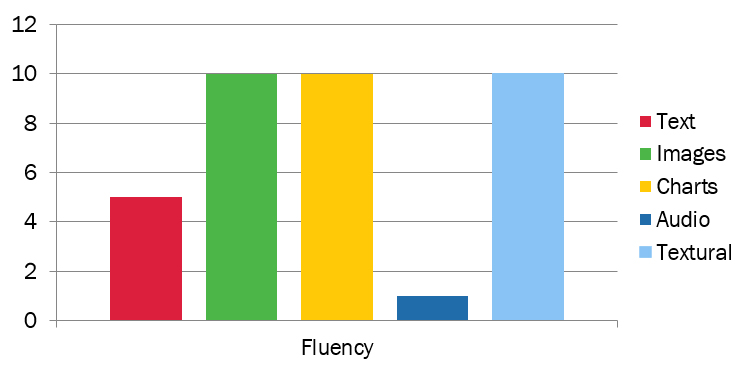
Learning is most effective when information is spread across a variety of media or input, activating many different cognitive processes. The brain takes these different inputs (e.g. text, images, charts, audio, textural), processes each input, and puts all of it together to create a whole "understanding."
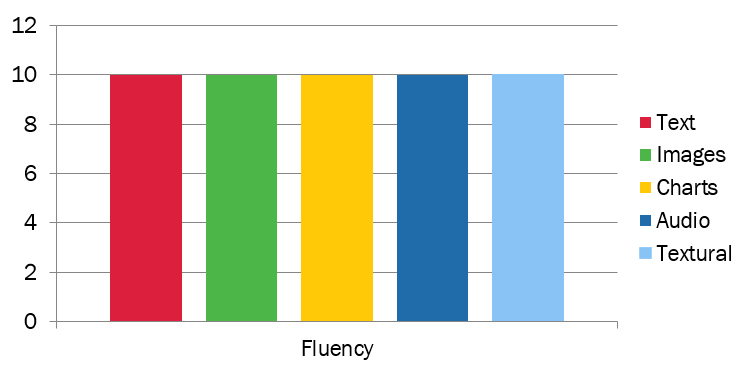
When students have problems with fluency in one or more areas of media, the other areas should be enhanced and enriched to compensate and scaffold the processes that are weak. The brain will still combine the various types of input to create a whole "understanding."
 Technologies
Devices to Enhance Listening
 FM Systems
- Infrared Systems
- Audio Induction Loop Systems
- Connecting Hearing Aids to Audio Devices
Communication Supports
- ASL Apps
 Signtel
- ASL Emergency Alert Systems
- TTY Systems
- Relay Services
- Texting
Visual Supports
- Visual Alert Devices
- Visible and Vibrating Alerts
Instructional Supports
- Interactive White Boards
- Math Manipulatives
- Robotics
- The Deaf Experience in Music
- Deaf DJ
